

Ceiling heating. Warmth from above.
The ceiling is the largest free surface in the room – no furniture in front of it, no rugs on top. Ideal for bringing radiant heat evenly into the room.
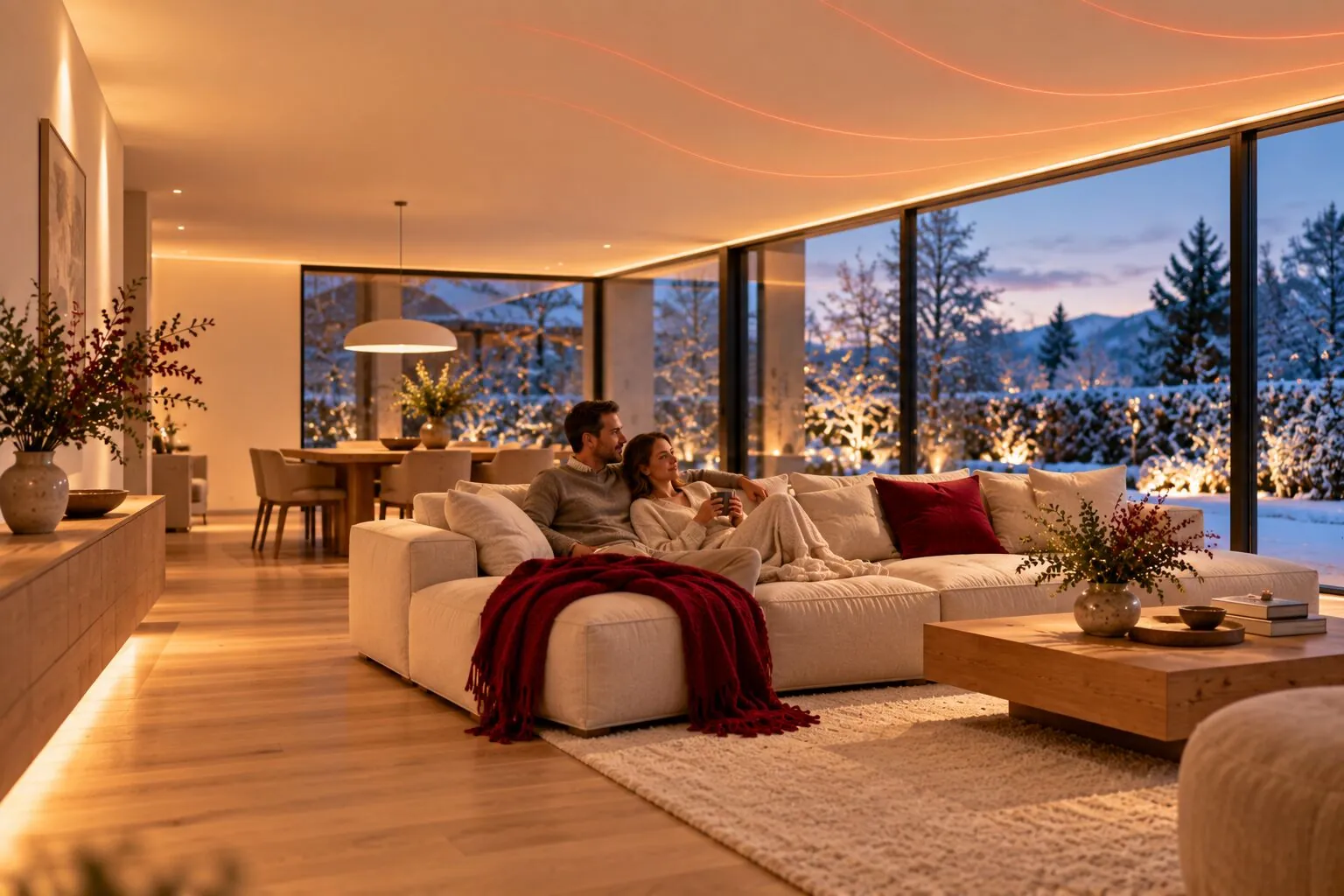
The most efficient surface in the room
The ceiling is almost always free: no cupboards, sofas or rugs restrict the heat output. The heating paint makes use of this surface and radiates evenly into the entire room.
This is a major advantage, especially in renovation: the floor build-up is preserved completely. No screed has to be broken up and no floor covering replaced.
- Number of heating fields based on calculated heat demand
- Solid ceilings, drywall and suspended ceilings
- Lights and outlets are left out at the planning stage
- Controlled room by room, accurate to 0.2 °C
Three ways onto the ceiling.
Heating paint applied directly
On a sound, primed substrate, always with thermal decoupling. Then filler and paint.
On plasterboard
Joints reinforced and filled, board joints at right angles to the copper strips, fully primed.
CARBON4® Complete
For suspended ceilings and timber or metal substructures, and also directly on concrete or hollow-core ceilings. With metal, make sure the supply cables are insulated.
Which ceilings are suitable for ceiling heating?
Can I install lights and spotlights in the heated ceiling?
Why the ceiling rather than the floor?
You might also be interested in
Your project. Individually planned.
Initial consultation of 30–45 minutes, by phone or video call.