

Drying damp walls. Heat instead of chemicals.
The heating paint goes directly onto the damp wall and warms the masonry in a controlled way. The wall dries out, condensation no longer forms – and mould loses its breeding ground.

How the wall dries out
- Apply: The heating paint goes directly onto the affected wall – deliberately without an insulation layer.
- Warm: The masonry is brought evenly to around 30 °C and the moisture evaporates.
- Protect: The warm surface prevents condensation, and mould loses its breeding ground.
- Maintain: A temperature sensor then provides demand-based control.
Where damp forms.
Room corners & external walls
Cold corners, window reveals and surfaces behind furniture.
Rising damp
Cellar walls and plinth zones, often with mould growth.
Churches & older buildings
Natural stone, rubble stone and sandstone masonry with vapour-permeable plasters.
Salt efflorescence
With corrosion-protected cables and connection components.
In cases of severe saturation or damage to the waterproofing, we bring in a specialist in building diagnostics – so that the remediation lasts.
From a wet wall to a dry one.
Every damp remediation is planned for the specific building. This is how it typically works:
Analysis
The cause, moisture level, masonry and salt load are recorded.
Heating strip
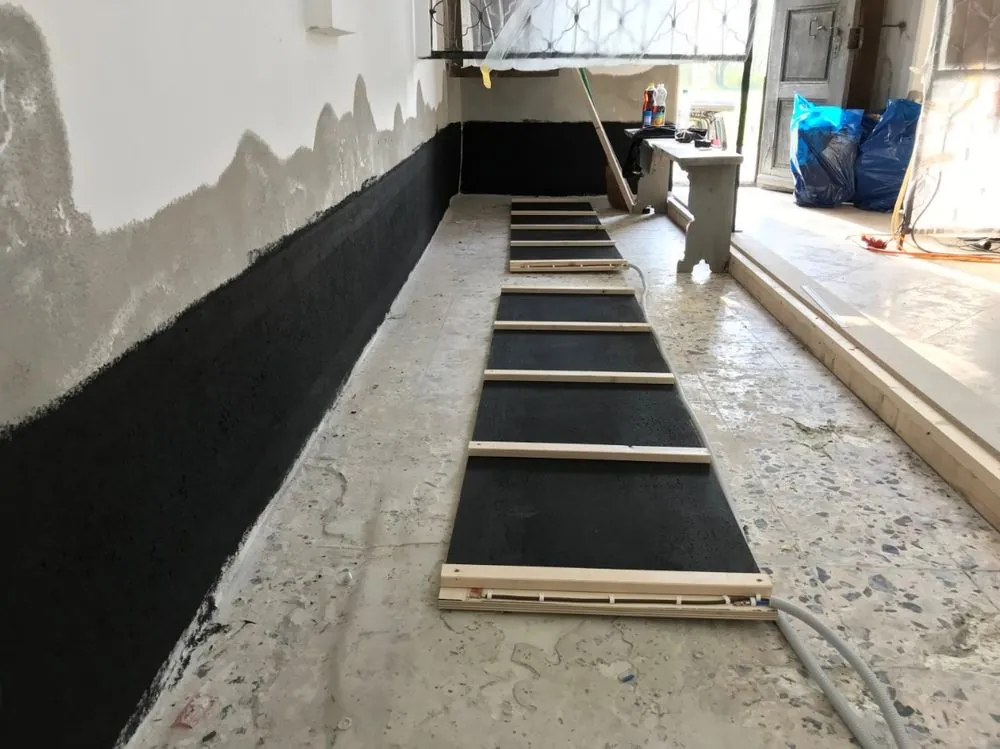
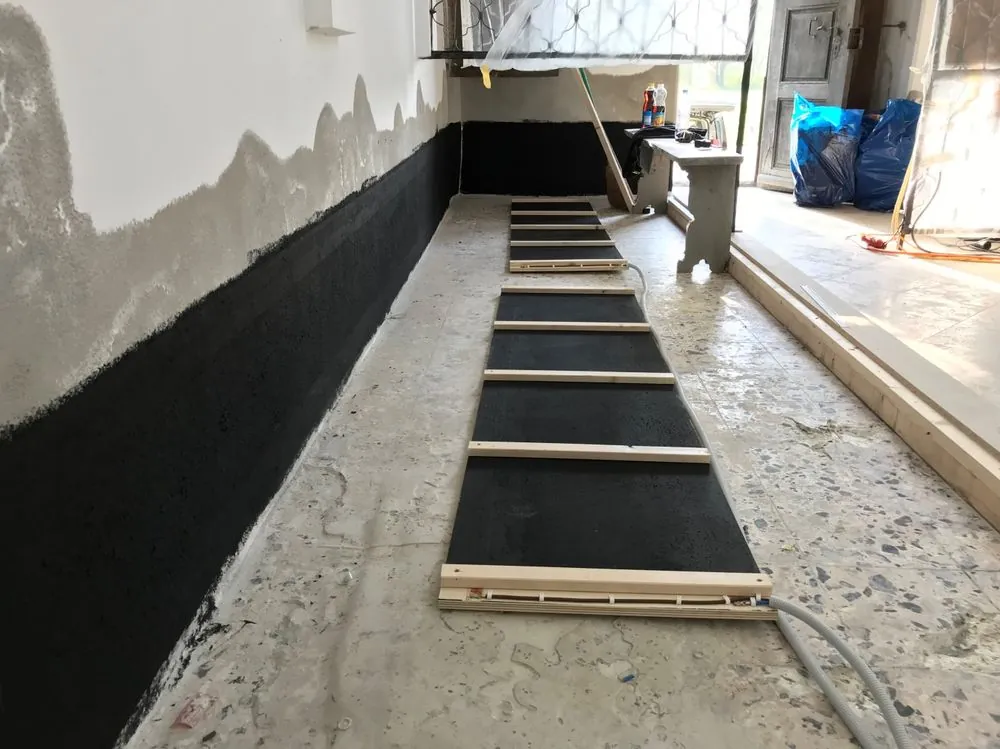
A 40 to 60 cm high strip of heating paint just above the floor – directly on the masonry.
Drying out
For the first few days the surface runs continuously, and a dehumidifier removes the moisture from the room air.
Control
A wall sensor measures the temperature in the masonry and controls operation.
Maintain
After that, operating twice a day for around an hour is usually enough.
Typical signs of damp walls.
The earlier damp is detected, the easier the remediation. Take these signs seriously:
Dark edges
Damp patches and tide marks in the lower part of the wall – often a sign of rising damp.
Spalling & salts
White efflorescence, crumbling plaster and flaking paint occur when salts migrate with the water.
Mould
Black spots in room corners, behind furniture and on window reveals – wherever the surface is cold.
Musty smell
A persistent musty smell indicates damp, even if it is not yet visible.
Drying and heating in one system.
If the wall is also to heat the room once it has dried out, CARBON4® combines both tasks in one wall build-up: insulation, heating paint and surface finish in one system.
- Solid wall
- Wood fibre insulation board
- Full-surface filler with mesh
- Double-sided adhesive tape
- Copper strip
- Mesh
- CARBON4® heating paint
- Mesh
- Finishing plaster
- Paint
How the system proposal is created
For every building, CARBON4® draws up an implementation concept – floor by floor, with floor area, position of the heating surfaces, heating track length and installed output. The ceiling is preferred for full heating; the exterior walls are the alternative.
We have been using low-voltage heating tracks against rising damp since 2012. This experience gave rise to the heating paint – a more flexible system in liquid form that follows every wall.
Visibly warm. Visibly dry.
Hover over an image – or tap it – to see the thermal image.
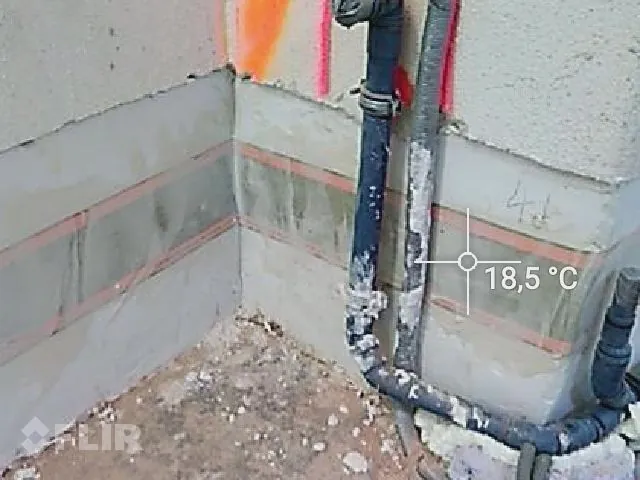
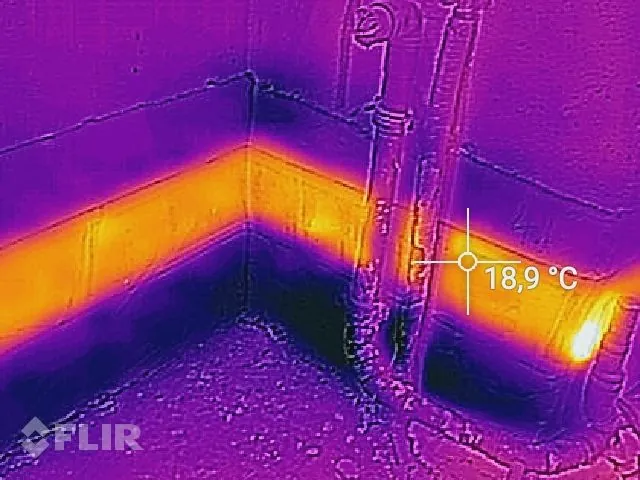
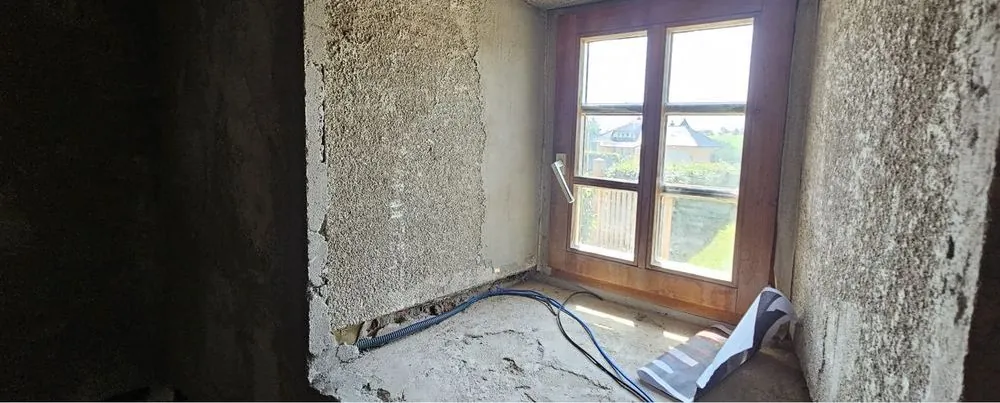
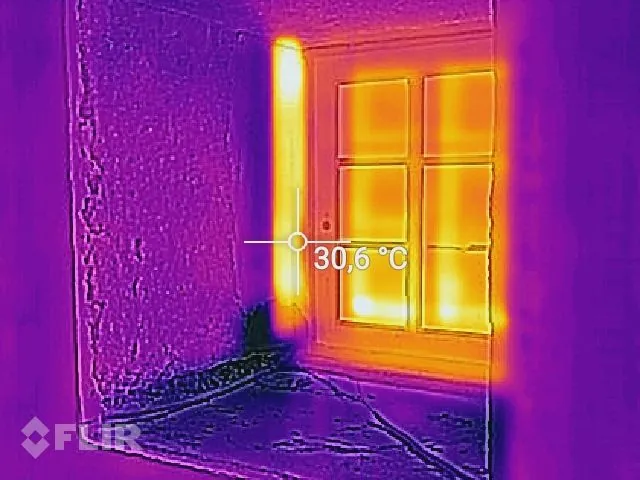
No chemicals, no structural intervention
Conventional methods use injections, cuts in the masonry or electrodes. The heating paint tackles the problem where damp and mould arise: at the cold surface. The warmed wall releases moisture, and the surface stays above the dew point.
- Operated with alternating current, not direct current
- Also with salt contamination – with corrosion-protected cables
- Suitable for listed buildings, with vapour-permeable lime and restoration plasters
- Usable as heating after drying out
Churches, vaults, cellars
The Bürgerspital with its hospital church in St. Veit an der Glan, dating from 1321 – 1.5 m thick stone walls, damp and salts – was renovated in 2015 and has been heated ever since. In the Hl. Kreuz pilgrimage church in Windshausen, also with 1.5 m thick walls, the system was used for damp remediation in 2017.
The right system for every wall.
The heating paint is at the heart of it. Depending on the property, other CARBON4® products complement it.
CARBON4® heating paint
Directly onto the damp wall, without an insulating layer – the heat goes specifically into the masonry.
Heating film 220/17
17 cm narrow heating track for window reveals, plinth areas and targeted surface temperature control.
CARBON4® Complete
System board with integrated insulation, when full heating is wanted after drying.
Panels & heaters
For rooms and situations where a surface coating isn’t the right fit – such as tall halls.
How does damp remediation with heat work?
How long does the heating run during damp remediation?
Where is the heating paint applied in the case of rising damp?
Does it also help with rising damp and salts?
Can I also use the wall for heating afterwards?
You might also be interested in
Damp wall? We'll take a look.
Describe the problem to us – photos help with the initial assessment.